

Visibility Challenge in B2B Marketing: Stay Top of Mind
March 6, 2026
How to Create a Strong Value Proposition in B2B
March 15, 2026

In a busy market, attention is hard to win and even harder to keep. If your message sounds like everyone else, buyers move on quickly. That is why B2B storytelling is becoming a powerful tool for growth. It helps your brand stand out, stay memorable, and connect with decision-makers in a human way.
Many B2B companies still rely on long explanations, heavy industry jargon, and complex messaging. The problem is simple: your prospects do not want to burn mental calories trying to understand what you offer. When your story is clear and structured, people grasp the value faster. They see how your solution fits their problem, and trust starts to build.
Good storytelling is not about drama or fluff. It is about guiding your audience through a simple path—from problem, to insight, to solution. When done right, it makes your brand easier to understand, easier to remember, and easier to choose. A study shows that people are 22 times more likely to remember facts if they are embedded in a story.
In this article, you will learn how B2B storytelling can turn plain messaging into a clear growth strategy. We will walk through a simple framework to help you communicate your value, connect with buyers, and move them towards action.
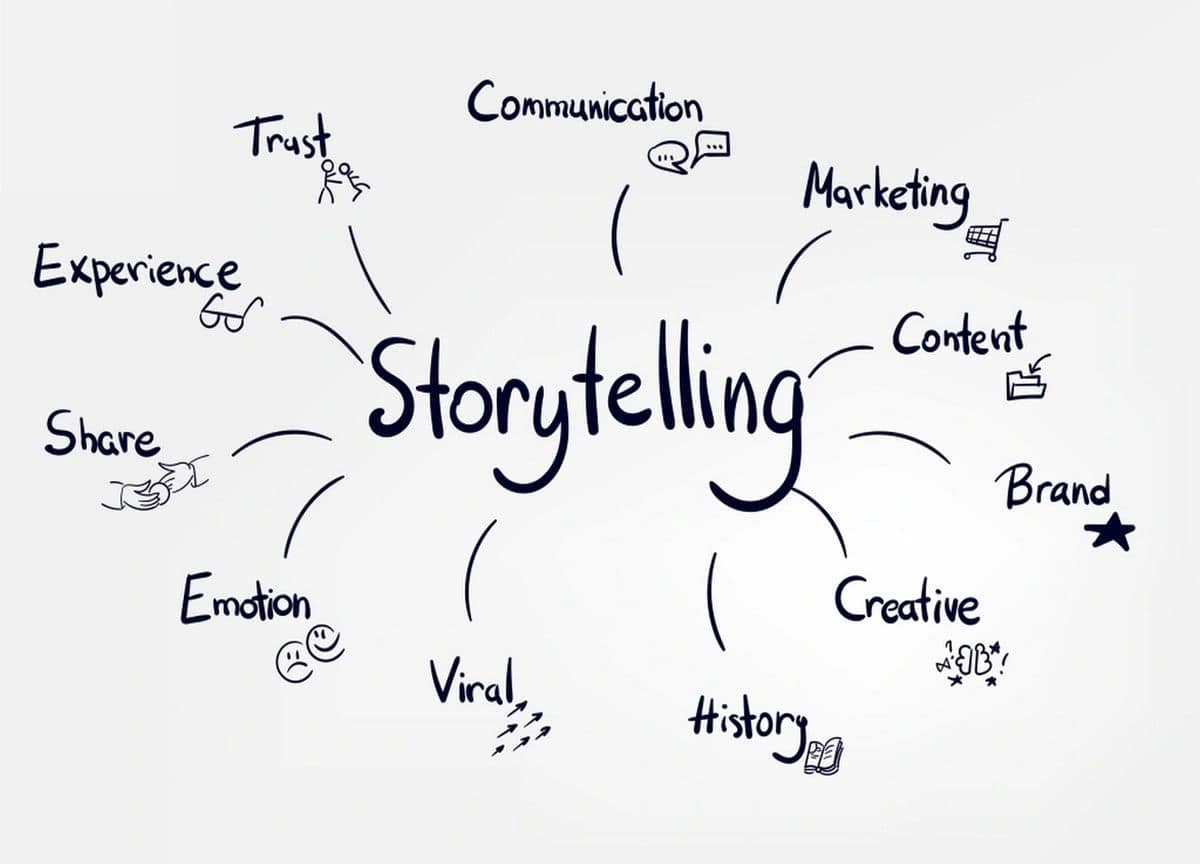
What is storytelling?
Storytelling is a structured way of communicating that maps your brand’s message to a narrative arc—typically involving a character (your customer), a problem, a guide (your brand), a plan, and a transformation. The most popular framework used in B2B is adapted from the Hero’s Journey and StoryBrand Framework.
These are not just creative exercises; they are strategic tools that help clarify your messaging, simplify your value proposition, and align your sales narrative across marketing touchpoints.
Why B2B Storytelling Matters
Contrary to popular belief, B2B buyers are not cold, rational robots who only care about specs and pricing. They’re humans with goals, fears, and pressures. They’re making high-stakes decisions that could affect their department, team, or career trajectory.
Here’s why storytelling works:
- Increases memorability: People forget facts quickly, but stories tend to stay with them much longer. A list of numbers or features may explain your product, yet it rarely sticks in someone’s mind. When you wrap those ideas inside a story, the message becomes easier to picture and remember
- Builds emotional connection: Even in B2B, decisions are not based on logic alone. Behind every company decision is a real person managing risk, pressure, and expectations. Facts and data help justify a choice, but trust and emotion often guide the final decision.
- Simplifies Complexity: Many B2B products and services are complex. They include technical terms, detailed features, and lengthy explanations. For many prospects, this can feel overwhelming. Stories help make things simpler. Instead of explaining every feature, you show how the solution works through a real situation.
- Improves conversion: Clear, story-driven messaging guides buyers step by step through their decision-making process. Instead of throwing random facts at them, a story shows the journey from problem to solution. It helps your audience understand where they are, what challenge they face, and how your offer can help.
Step-by-Step Guide: How to use the B2B Storytelling Framework
1. Identify Your Customer as the Hero
In many B2B messages, the brand tries to be the hero. The company talks about its features, awards, and achievements. But strong storytelling works in a different way. Your customer is the hero of the story, not your brand. They are the ones facing the challenge and trying to reach a goal. Your role is the guide who helps them succeed. When your message focuses on the customer’s journey instead of your company, it becomes easier for prospects to see themselves in the story.
Ask:
- What are their pain points?
- What transformation are they seeking?
- What internal, external, and philosophical problems are they battling?
2. Define the Problem
In strong storytelling, a problem is not just one simple issue. It usually has three layers.
The first is the external problem, which is the visible challenge the customer faces.
The second is the internal problem, which is the frustration or pressure they feel because of it.
The third is the philosophical problem, which reflects a bigger belief about what should be right or fair.
When B2B storytelling speaks to all three levels, the message becomes deeper and more meaningful. It shows that you understand both the situation and the person behind the decision.
3. Position Your Brand as the Guide
In effective B2B storytelling, your brand is not the hero of the story. Your customer is. Your role is that of a guide who helps them succeed. Think of it this way: you are not Frodo carrying the ring—you are Gandalf showing the way forward. A good guide understands the challenge and offers a clear path to solve it.
- Empathy: Show that you understand the customer’s problem and the pressure behind it. When prospects feel understood, they are more open to your message and solution.
- Authority: Demonstrate that you have the knowledge and experience to help. Share proof such as results, expertise, or real examples that show you can guide them to success.
4. Call them to Action
In every strong story, there is a moment when the hero must decide what to do next. In B2B storytelling, your call-to-action is that moment. After showing the problem and the path forward, you need to guide your audience toward the next step. A clear CTA helps prospects move from interest to action without confusion.
- Direct CTAs: These invite prospects who are ready to take immediate action. Examples include Book a Demo, Schedule a Consultation, or Get Started Now.
- Transitional CTAs: These help prospects who are still exploring. They offer a low-pressure next step, such as “Download Our ROI Guide, Read the Case Study, or Try Free for 14 Days.
5. Paint the Picture of Success
A strong story does not stop at the solution. It also shows what life looks like after the problem is solved. In B2B storytelling, this means helping your audience picture the results of choosing your solution. When people can clearly see the outcome, the value becomes real and easier to believe.
- Show the transformation: Describe practical results your customer can expect, such as fewer missed deals, more confident sales teams, or smoother operations.
- Make the success feel real: Go beyond vague promises like “drive growth.” Instead, paint a clear picture of progress, such as a team hitting targets, leaders gaining recognition, and the business moving forward with confidence.
6. Highlight What’s at Stake if They Don’t Act
What’s the cost of inaction?
Maybe it’s falling behind competitors, continued inefficiencies, or frustrated employees. Adding stakes to your story creates urgency.
Real-World Examples of B2B Storytelling
Salesforce
Salesforce doesn’t just sell software. They tell stories about how sales leaders turn teams into revenue machines with the right tools.
HubSpot
HubSpot uses storytelling in its customer case studies, showing marketers who went from chaos to clarity by using its platform.
Slack
Slack’s storytelling centers around productivity and connection. They highlight how teams stay in sync, reduce meetings, and move faster.
Each of these brands aligns its storytelling with its customers’ journey.
Where to Use Storytelling in Your B2B Marketing
Storytelling should not be siloed to blog posts or brand videos. Infuse it across your entire funnel:
- Website homepage: Frame it like a hero’s journey.
- About Us page: Share the origin story of your company.
- Case studies: Show transformation stories of real customers.
- Email campaigns: Create narrative-based sequences that build curiosity.
- Sales presentations: Start with the problem, then show how you help solve it.
- Ads and landing pages: Make the user the protagonist.
Tips for Writing Better B2B Storytelling
- Use simple language. You’re not trying to sound smart—you’re trying to be clear.
- Focus on one idea per story. Don’t cram everything in one message.
- Make it emotional, not dramatic. Speak to real human fears, desires, and aspirations.
- Stay authentic. Don’t manufacture stories. Use real customer wins.
- Test and optimize. A/B test story-driven CTAs, headlines, and formats that are most relatable for your audience.
Conclusion
Storytelling is not just a branding exercise; it’s a growth strategy. For B2B brands navigating crowded markets and complex buyer journeys, storytelling provides the clarity, connection, and conversion edge you need.
Remember: your customer is the hero. Your role is to guide them, show them what’s possible, and lead them to a better version of themselves.
If your current messaging feels flat, cold, or too technical, it’s time to reframe the narrative. Start with empathy, use a proven storytelling structure, and align every touchpoint with your buyer’s journey.
Because in B2B, the best story wins.
Take the next step
Ready to transform your B2B messaging with storytelling that sells?
At Proconnect Digital, we help growth-driven brands like yours develop customer-centric narratives that cut through the noise and convert.
Let’s build your story.
Book a Free Messaging Audit and download our free guide: The 7-Step Growth Blueprint to uncover hidden leaks in your marketing.
Your story deserves to be heard, and your audience is waiting.

Digital Marketing Specialist | I help B2B Companies Grow with Clear Strategy, Simple Systems & Measurable Results